

The Summer Rodent Surge: Why Rats and Mice are Invading Toronto Yards this June
Category: Summer Pest Control / Rodent Removal
Reading Time: 7 Minutes
When you think of mice and rats, you usually think of winter. You picture them shivering in the snow and sneaking into your warm basement.
So, why are you suddenly seeing a rat scurry across your patio in the middle of a beautiful, warm Toronto June? Why are there droppings around your barbecue?
At City & Country Pest Control, we see a massive, secondary spike in rodent calls every summer. It confuses homeowners, but from a biological and environmental standpoint, it makes perfect sense. In fact, summer is when rodent populations actually explode.
Here is the simple science of why rats and mice are in your yard right now, how to tell them apart, and how to stop them before they decide to move indoors permanently.
Why are Rats Active in Summer?
In Toronto, summer rat and mouse activity is primarily driven by two factors: urban construction and abundant food. June is peak construction season. When heavy machinery digs up roads, sewers, and housing foundations, it destroys underground rodent burrows. This forces entire colonies of Norway Rats to evacuate and seek shelter in nearby residential yards. Once in your yard, they stay because summer provides easy access to food and water through unsecured garbage cans, vegetable gardens, and grease drips from outdoor barbecues.

Part 1: The “Earthquake” Effect (Construction Displacement)
If you live anywhere in the Greater Toronto Area, you know that summer has two seasons: hot weather and construction.
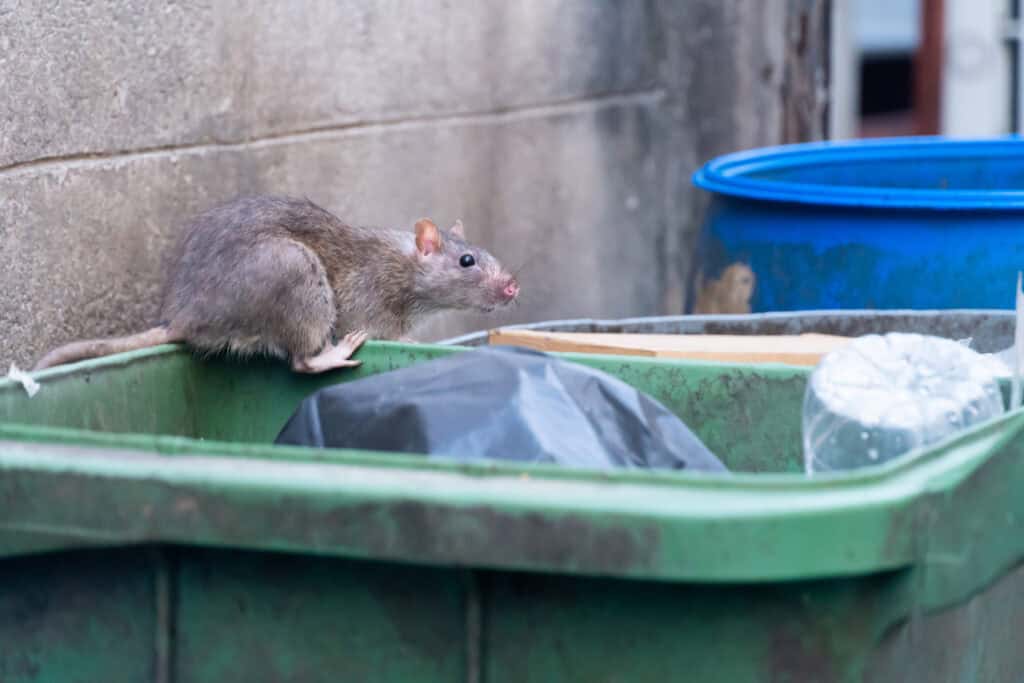
Here is how that affects the rodent population. The most common rat in Ontario is the Norway Rat (also called the brown rat or sewer rat). They do not live in trees; they live underground in complex burrow systems.
Imagine living in an underground apartment building. Suddenly, a giant backhoe rips the roof off your building. What do you do? You grab your family and run to the nearest safe neighbourhood.
When a city water main is replaced, or a new condo foundation is dug down the street, it is the equivalent of an earthquake for the local rat colony. Hundreds of rats are displaced overnight. They scurry down alleyways and through fences until they find a quiet, undisturbed area, which is usually the space under your wooden deck, behind your pool heater, or inside your garden shed.
Part 2: The Summer Buffet (Why They Stay)
Displacement brings them to your property, but your habits are what keep them there.
In the winter, food is incredibly scarce. In June, your backyard is a 24/7 buffet. Rodents have incredibly sharp senses of smell, and they are drawn to three specific summer staples:
- The Barbecue Grease Trap: Mice and rats love high-fat, high-calorie foods. The grease pan under your outdoor grill is a prime target. If you don’t clean it regularly, it is essentially a neon diner sign for rodents.
- The Thirsty Rat: Summer heat makes rodents thirsty. Bird baths, kiddie pools, and even the condensation dripping from your central air conditioning unit provide the constant water source a rat needs to survive.
- The Garden Harvest: Fallen tomatoes and strawberries, along with accessible compost bins, provide endless carbohydrates.
Part 3: Rat vs. Mouse (Know Your Enemy)
If you see a grey blur run across your patio at dusk, you need to know what you are dealing with. Treating a mouse problem is very different from treating a rat problem.
The Quick Identification Guide:
| Feature | The House Mouse | The Norway Rat |
| Size | Small (2 to 4 inches body) | Large (7 to 9 inches body) |
| Ears & Eyes | Large, floppy ears; large eyes | Small ears tightly pinned to the head; small eyes |
| The Tail | Long, thin, and covered in fine hair | Thick, scaly, and hairless (shorter than its body length) |
| Droppings | Size of a grain of rice with pointed ends | Size of an olive pit or jellybean with blunt ends |
| Behavior | Curious; will investigate new traps | Highly suspicious (Neophobic); avoids new objects |
Part 4: Why Hardware Store Traps Fail Outdoors
When homeowners see a rat near their shed in June, they often buy standard wooden snap traps and place them in the grass. This is highly ineffective and dangerous for several reasons:
- Neophobia: Rats suffer from “neophobia” – the fear of new things. If you put a brand new wooden trap in their territory, they will actively avoid it for weeks.
- Weather: A little June rain or heavy morning dew will warp wooden traps, rust the springs, and wash the peanut butter bait away.
- The Non-Target Risk: Setting open snap traps or tossing hardware-store poison pellets under your deck is incredibly dangerous. You are just as likely to snap the paw of a neighbourhood cat, a squirrel, or a curious toddler as you are to catch a rat.
Part 5: The Professional City & Country Pest Control Solution
To stop a summer rodent surge, you have to cut off their resources and manage the population safely. Here is how our Integrated Pest Management (IPM) approach works for summer rodents:
1. Secure Baiting Stations
We do not use open traps or loose poison. We install heavy-duty, commercial-grade bait stations around the perimeter of your home and yard. These stations are anchored down and require a special key to open.
The Benefit: They are 100% tamper-proof. Your dog, your children, and the local wildlife cannot access the treatments inside. The rat goes in, feeds in a protected environment (which they prefer), and leaves.
2. Exterior Exclusion
We identify the “highways” the rodents are using. We look for burrows under concrete pads, gaps under shed doors, and entry points where air-conditioning pipes enter your brickwork. By sealing these structural gaps with heavy-gauge wire mesh and professional sealants, we ensure that the outdoor rats cannot become indoor rats when the weather eventually cools down.
3. Environmental Modification Advice
Our technicians act as your property consultants. We will point out the overgrown bushes that need trimming, the firewood that needs to be elevated, and the specific ways to secure your garbage bins to make your yard invisible to foraging rodents.
Don’t Let Rodents Ruin Your Summer
You wait all year for summer in Toronto. Your backyard should be a place for family barbecues and relaxation, not a sanctuary for displaced city rats.
If you are seeing burrows along your fence line, finding droppings near your grill, or spotting rodents at dusk, the colony is already established.
Contact City & Country Pest Control Today for a Professional Exterior Rodent Inspection