
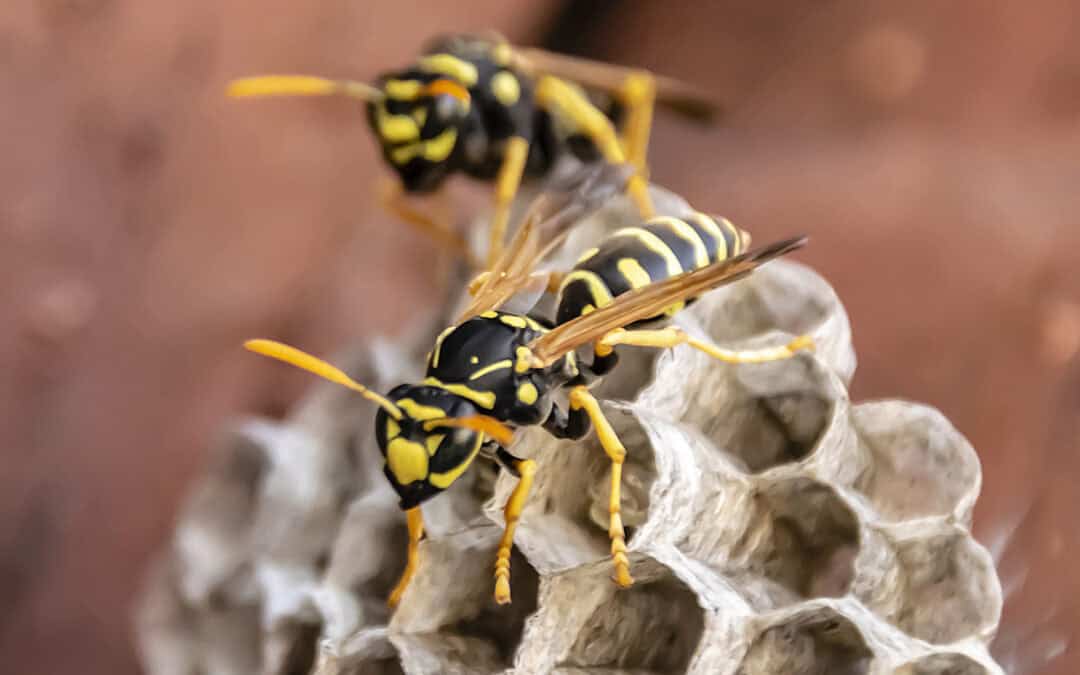
It’s May in Toronto. You’re finally outside, cleaning out the eavestroughs or setting up your patio furniture for the first barbecue of the season, and you look up at the corner of your porch roof and spot the wasp nest.
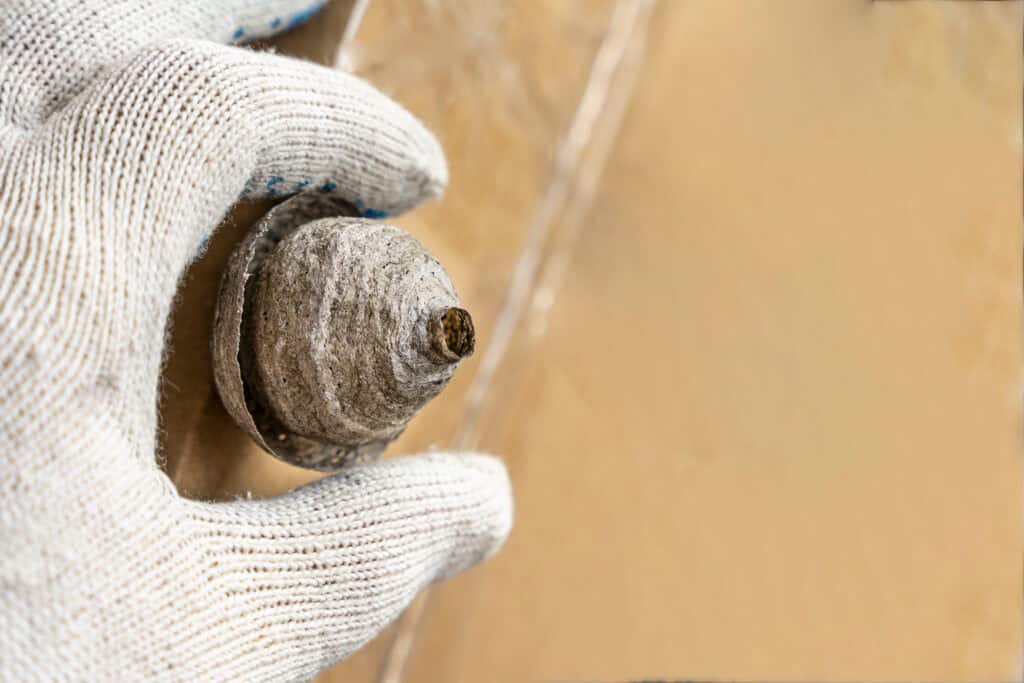
A tiny, grey, paper-like cone hanging from the wood. That wasp nest is no bigger than a golf ball. You might see a single, large wasp crawling on it.
The instinct for most homeowners is to ignore it. “It’s so small,” you think. “I’ll just leave it alone, and maybe they’ll leave me alone.”
At City & Country Pest Control, we are here to tell you that this is the most expensive pest control mistake you can make this spring. That tiny nest is not a minor nuisance. It’s a ticking time bomb!
Here’s exactly what that golf-ball-sized nest is, why it is an emergency, and how dealing with it in May saves you hundreds of dollars in August.
Why is a Small Wasp Nest Dangerous?
Why should you remove a small wasp nest in the spring?
A golf-ball-sized wasp nest in May is a “starter nest” built entirely by a single Queen wasp who just woke up from winter hibernation. At this stage, the Queen is vulnerable and alone. If you leave the nest alone, the eggs inside will hatch into worker wasps within weeks.
By August, that single Queen will remain safely hidden inside while her offspring expand the nest to the size of a basketball, housing up to 3,000 highly aggressive, stinging wasps. Eliminating the Queen in May prevents the entire summer colony from existing.
Part 1: The Biology of the May Wasp Nest (The Lone Queen)
To defeat a wasp colony, you have to understand how they survive the winter.
Unlike honeybees, which hunker down and survive the cold as a massive group, wasp colonies die off completely every fall. The workers die, the males die, and the old nest is abandoned forever.
The only wasps that survive an Ontario winter are the newly fertilized Queens. They spend the winter hibernating under tree bark or deep inside your attic insulation.
-
The Awakening: When the temperature consistently hits 10°C in late April and May, the Queens wake up.
-
The Solo Mission: Right now, the Queen has no army. She has to do all the work herself. She gathers wood fibre, chews it into paper paste, and builds that tiny golf-ball-sized nest.
-
The Vulnerability: She lays her first batch of 10 to 20 eggs and has to fly back and forth to feed them caterpillars and insects. This is the only time of the year the Queen leaves the nest.
The Bottom Line: When you see a wasp building a small nest in May, you are looking at the Queen.
Part 2: The Math of a Wasp Nest (Exponential Growth)
Why is a small nest an emergency? Because of exponential growth.
Let’s look at the timeline of what happens if you decide to “wait and see”:
- Late May: The Queen’s first batch of eggs hatches into sterile female workers.
- June: The Queen stops building and stops flying. She stays deep inside the nest and becomes a full-time egg-laying machine. The new workers take over building the nest and hunting for food.
- July: The nest grows from a golf ball to a softball, then to a melon. Hundreds of workers are hatching every week.
- August: The nest is now the size of a basketball. It contains between 1,000 and 3,000 aggressive wasps that are heavily defending their territory (your patio).
By killing one solitary insect in May, you are preventing 3,000 stinging insects from ruining your backyard in August.
Part 3: What Kind of Wasp Nest is It? (Quick ID Guide)
Not all wasps build the same way. Here is a quick guide to what you are looking at under your eaves:
| Wasp Type | Nest Appearance in May | Threat Level | Nest Location |
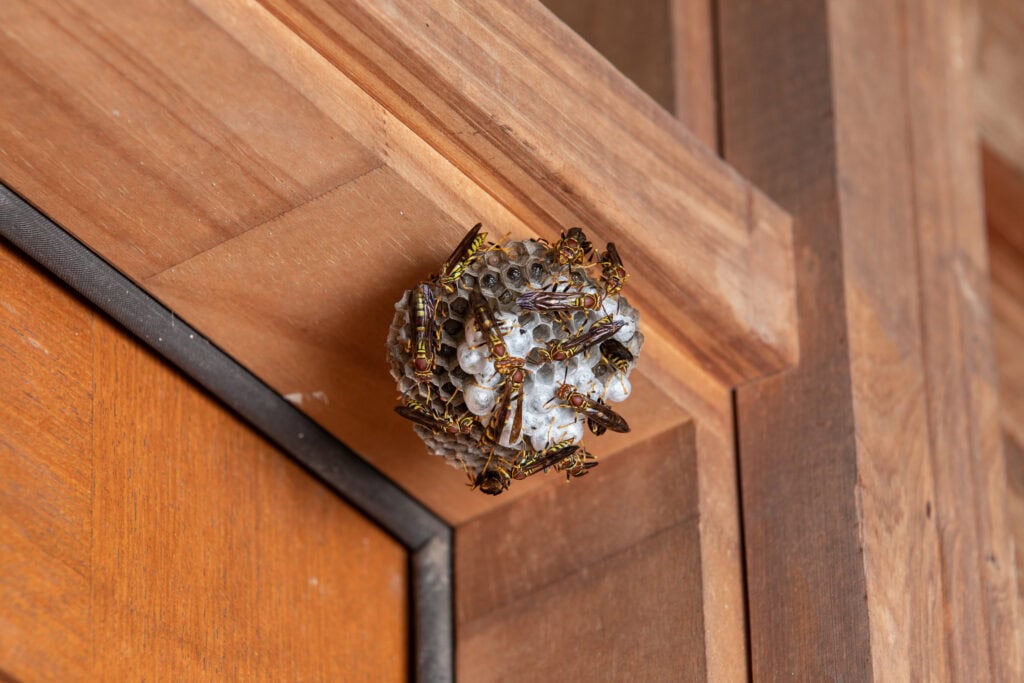
| Paper Wasps | Looks like an upside-down umbrella with visible honeycomb cells. | Medium. Generally docile unless you get very close. | Eaves, porch ceilings, and window frames. |
| Yellowjackets | Rarely visible. You will see wasps flying into a crack in your brick or siding. | High. Highly aggressive and easily agitated. | Wall voids, underground burrows. |
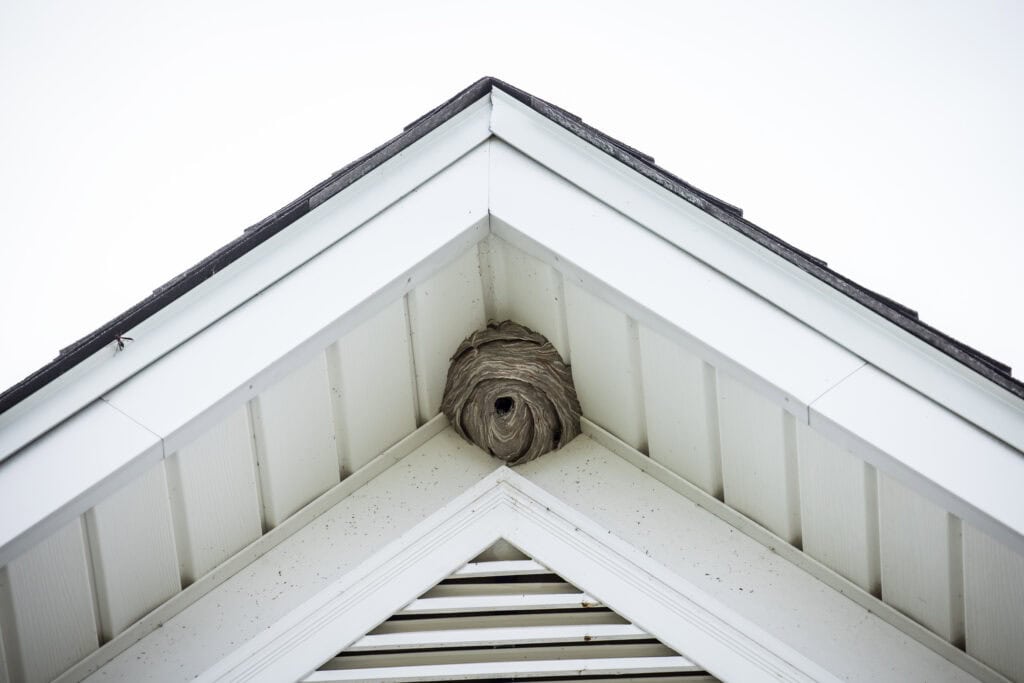
| Bald-Faced Hornets | A tiny, grey, enclosed paper ball with a single entry hole at the bottom. | Extreme. They will defend their nest aggressively and can spray venom. | High up in trees, under heavy roof overhangs. |
Part 4: Why “Waiting to See” What Kind of a Wasp Nest, Costs You Money
Beyond the safety risk to your family and pets, ignoring a spring wasp nest is a bad financial decision.
The Cost of May: Treating a starter nest in May is a straightforward, low-risk procedure. The nest is small, there are very few wasps to fight back, and the treatment is quick.
The Cost of August: By late summer, if a Yellowjacket Queen has built her nest inside your wall void (because she found a tiny crack in your brickwork back in May), you have a major structural problem.
-
The workers will chew through your drywall to expand the nest.
-
You may hear a “crinkling” or “scratching” sound in your walls.
-
Eventually, they will break through the drywall and swarm the inside of your living room.
Extracting a mature Yellowjacket nest from inside a wall requires specialized dust treatments, protective suits, and sometimes minor drywall repairs. It takes more time, more product, and inherently costs more money.
Part 5: The Professional Wasp Nest Solution (Stop Them Before They Build)
If you find a golf-ball-sized nest, you might be tempted to hit it with a broom or spray it with a can of hardware store foam.
Here is why that often fails: If the Queen is out hunting when you destroy the nest, she will simply come back, see her house is gone, move three feet down the wall, and start building again.
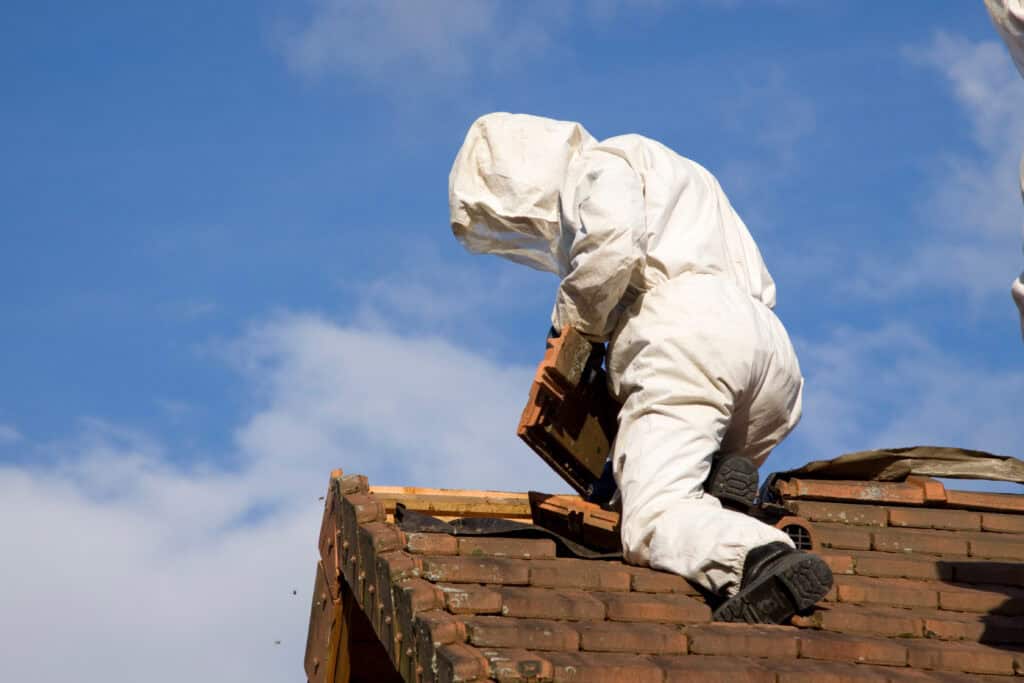
The City & Country Preventive Approach
Property owners should be vigilant this time of year. Inspect your property for these small nests and call us to properly and effectively remove them. Look for signs of wasps entering your home through cracks or joints. This indicates there may be a nest in the making.
- Targeted Elimination: We safely remove the starter or growing nest and ensure the Queen is eliminated.
- Exterior Preventative Sprays: We find that these sprays aren’t as effective as Targeted Elimination.
- City & Country Quality Work: When you contract us for wasp elimination, our work is guaranteed for the season. If the wasps come back, we come back!
Secure Your Backyard for the Summer
Don’t let a single Queen dictate whether you can enjoy your patio this summer. The absolute best time to manage a wasp problem is right now, before the colony actually exists.
If you see a starter nest, or if you had wasp issues last year and want to guarantee they don’t return, call us today at (905) 455-1102
Contact City & Country Pest Control Today for Wasp Nest Removal.