
Category: Winter Home Care / Rodent Control Reading Time: 6 Minutes
If you look out your window right now, you probably see a winter wonderland. Snow is piled high against fences, covering the garden, and drifting up against the side of your home.
It looks peaceful. But to a mouse, that snowdrift isn’t scenery. It’s a siege tower.
At City & Country Pest Control, we always see a specific spike in calls about 3 to 4 weeks into a harsh, snowy winter. Homeowners who have never had mice before suddenly hear scratching in the walls.
Why? It’s due to simple physics and biology: The Snow Bridge and The Calorie Gap.
1. The Physics: What is a “Snow Bridge”?
Usually, mice enter homes at the ground level, through gaps in the foundation, garage door seals, or basement windows. If you have “pest-proofed” your home, you likely sealed these lower areas.
But heavy snowfall changes the geometry of your house.
When snow piles 2, 3, or 4 feet high against your brickwork, it creates a new “ground level.”
-
The Danger: Mice can now walk over your pest-proofing.
-
The Reach: That snowbank allows them to walk right up to utility vents, window ledges, and weeping holes that are normally 3 feet off the ground and out of reach.
-
The Camouflage: The snowdrift acts as a tunnel. Mice can tunnel inside the snowbank (a zone scientists call the “subnivean space”), protected from the wind and predators, right up to your exterior wall. They can gnaw at your siding without you ever seeing them.
2. The Biology: Metabolic Desperation
The second factor driving pests indoors right now is the extreme temperature.
A mouse is a tiny mammal with a very fast heart rate. To keep its body temperature at 37°C when it is -20°C outside, its metabolism has to run like a furnace at maximum capacity.
-
The Calorie Gap: In mild winters, a mouse can survive on a few seeds and crumbs. In a harsh winter, they burn calories so fast that they will starve to death in hours without high-energy food.
-
The Behaviour Shift: This desperation overrides their natural fear.
-
Normally, mice are shy and stick to the shadows.
-
Right now, they are bold. They will chew through drywall, climb pantry shelves, and risk exposure because the drive for calories is stronger than the fear of you.
-
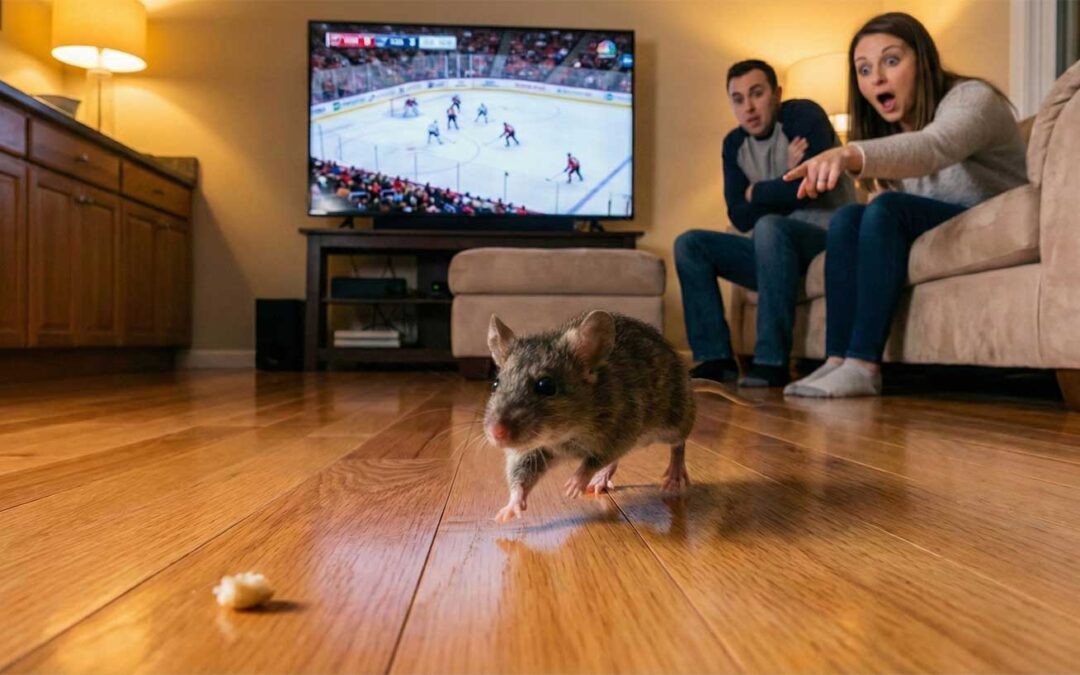
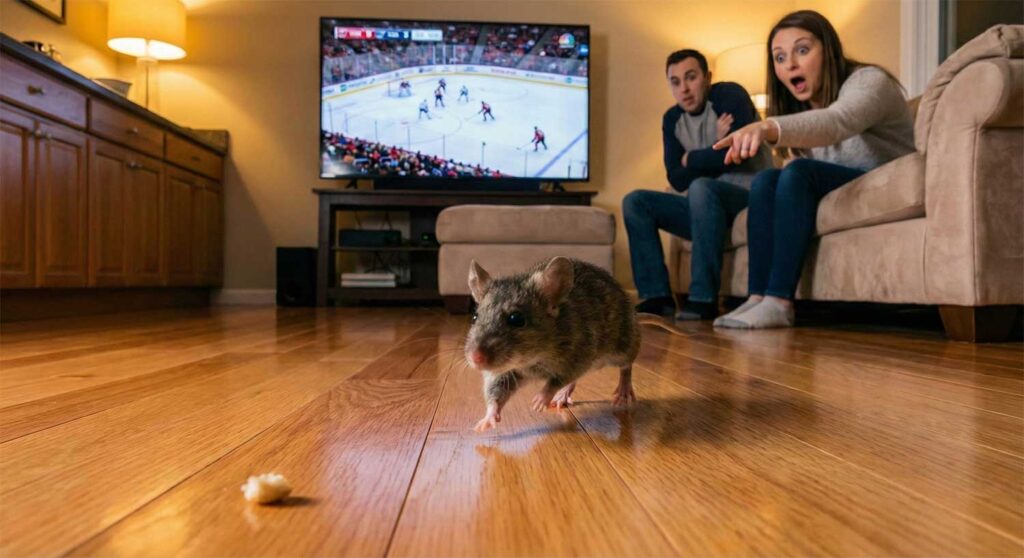
This is why you might see a mouse run across your kitchen floor at 7 PM while you are watching TV. It isn’t being Brave. It is Desperate.
3. The “Silent” Danger: Ice Dams and Carpenter Ants
A harsh winter doesn’t just bring rodents. It brings ice.
If you see giant icicles hanging from your eavestroughs, you likely have “Ice Damming.” This happens when heat from your attic escapes, melts the snow on the roof, and refreezes at the gutter.
Why does a pest control company care about ice? Because ice expands. It forces its way under shingles and behind fascia boards, prying them open.
-
Immediate Threat: This creates new entry points for squirrels and raccoons seeking warmth.
-
Delayed Threat: The moisture from the ice dam rots the wood. Come spring, that wet, soft wood is a beacon for Carpenter Ants and termites. The damage starts now, but you won’t see the ants until April.
Action Plan: What You Can Do Today
You cannot stop the snow from falling, but you can stop the “Siege Tower.”
1. The “Perimeter Cut” (Crucial Step): Go outside with a shovel. Clear a gap of about 12 to 18 inches between the snowbank and your house foundation.
-
This breaks the “Snow Bridge.”
-
It exposes any mice trying to approach your house to the wind and predators (owls and hawks), making them less likely to try to get in.
-
Bonus: It prevents melting snow from leaking into your basement.
2. Check the “High” Vents. Look at your dryer vent and furnace exhaust pipes. Are they buried in snow? Clear them immediately. Not only is this a pest entry point, but a blocked furnace pipe is a serious Carbon Monoxide hazard for your family.
3. Listen to the Walls. If you hear scratching, don’t wait for “spring cleaning.”
-
Light scratching/scurrying: Likely mice.
-
Heavy thumping/rolling: Likely a raccoon or squirrel.
In a deep freeze, these animals are fully settled in. They are nesting. The longer they stay, the more insulation they destroy and the more electrical wiring they expose to chewing.
The Bottom Line
A harsh Ontario winter is a stress test for your home. If you hear noises in the ceiling or spot a mouse in the kitchen, it is not a coincidence—it is a result of the weather.
Don’t let the snow give pests a free ride into your home. Break the bridge, clear the vents, and if the invaders are already inside, contact City & Country Pest Control. We have the tools to evict them, even at -20°C.
Contact Us: Get a Winter Rodent Inspection